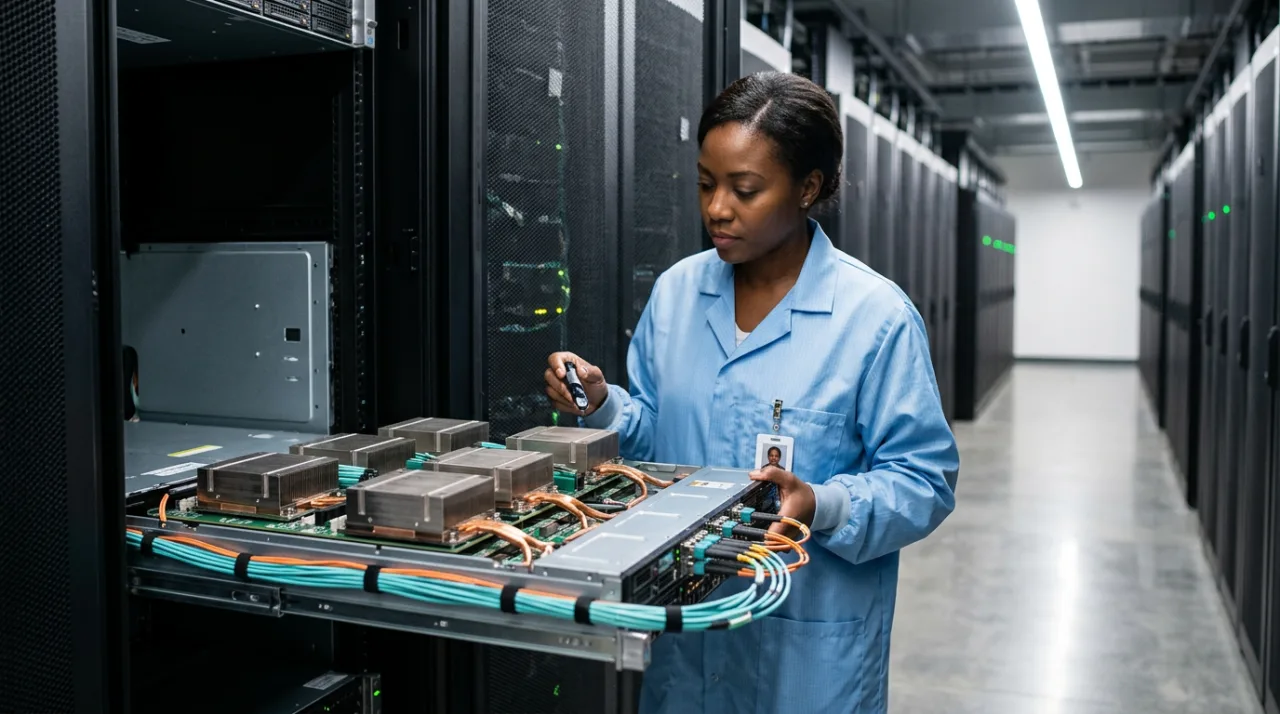
Google and Meta released TorchTPU on October 20, 2026, at the PyTorch Conference. The open-source backend lets users run existing PyTorch code on Cloud TPUs with changes as small as swapping device strings from cuda to tpu.
The project targets production workloads that previously required JAX or TensorFlow. It supports eager mode for debugging and torch.compile for optimized runs without any JAX runtime.
Technical Capabilities and Ecosystem Integrations
TorchTPU v0.2.0 is available on PyPI for Python 3.11 and later under the Apache 2.0 license. The release covers roughly 450 ATen operators, enough for the core layers in major model architectures. It runs on TPU v5e instances and scales to clusters of 8,192 Ironwood chips.
Quantization support includes FP8, MXFP4, and NVFP4 formats. Distributed training works through DDP, FSDP, and DTensor. Early benchmarks show 52 percent model FLOPs utilization when training Qwen 3 8B with TorchTitan on Ironwood hardware.
Integrations cover Hugging Face Transformers v5 with device_map set to tpu, Diffusers, vLLM with Pallas kernels, SGLang using RadixAttention, TorchTitan, Ray, TorchRec, llm-d 1.0, VeRL, and LiteRT. Production use has already begun at several large Google Cloud customers.
Replacement Path from Prior TPU Solutions
TorchTPU replaces PyTorch/XLA, which Google marked as deprecated with an archive date of November 15, 2026. It also supersedes TorchAX. The new backend follows PyTorch’s PrivateUse1 interface to deliver standard eager execution and Dynamo-based compilation.
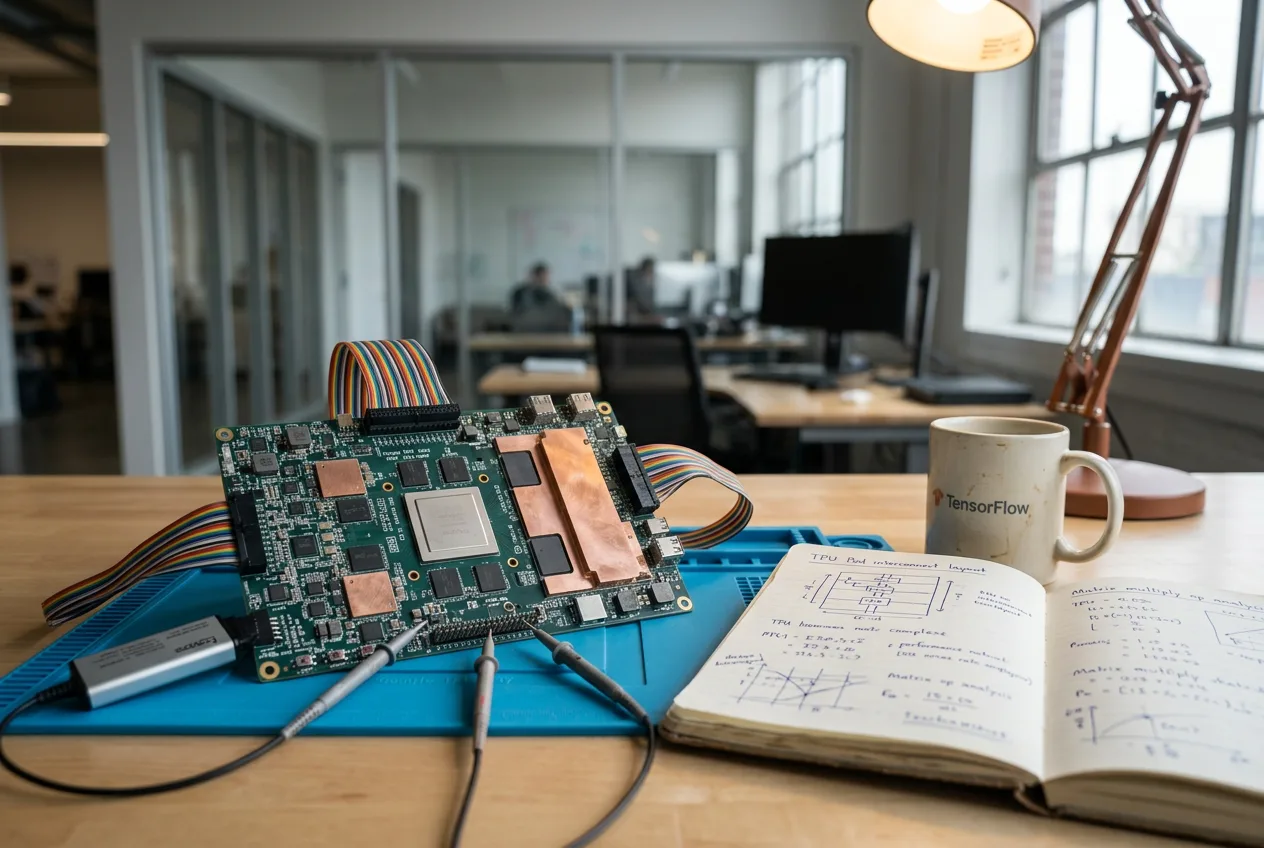
Migration requires only device string updates in most cases. Teams can test code in eager mode before switching to compiled execution for speed. One internal fine-tuning workload moved from 11.49 seconds per step in eager mode to 2.78 seconds after compilation.
The design gives users hardware choice alongside GPUs and CPUs while maintaining familiar PyTorch APIs and tooling. Google began development in mid-2025 and collaborated with Meta’s PyTorch team on the final release.
Development Roadmap and Next Milestones
Work continues over the next 6 to 12 months on production hardening, expanded operator coverage, and additional quantization formats for future TPU generations. Plans include pod-scale reinforcement learning, support for mixture-of-experts and multimodal models, and further ecosystem connections.
An early preview of the TPU agent suite is already available. The GitHub repository at google-pytorch/torch_tpu hosts the code, with companion forks for vLLM and SGLang. Documentation lives at torchtpu.readthedocs.io.
Teams evaluating new inference or training hardware can now test TorchTPU directly on Cloud TPU resources without rewriting model code or adopting separate runtimes.
Frequently asked questions
How does TorchTPU differ from PyTorch/XLA?
TorchTPU uses PyTorch’s native PrivateUse1 interface and supports eager execution plus torch.compile without JAX dependencies. PyTorch/XLA is deprecated and scheduled for archiving on November 15, 2026.
What model frameworks work with TorchTPU today?
Current integrations include Hugging Face Transformers v5, Diffusers, vLLM, SGLang, TorchTitan, Ray, TorchRec, and LiteRT. Device placement uses the standard device_map parameter.
Which TPU generations does TorchTPU support?
The backend runs on TPU v5e and scales to 8,192 Ironwood chips. Quantization formats FP8, MXFP4, and NVFP4 are available in the initial release.
What code changes are required to adopt TorchTPU?
Most workloads need only a device string change from cuda to tpu. Eager mode allows immediate testing before compilation for performance.
By YasTech Editorial
Comments 2