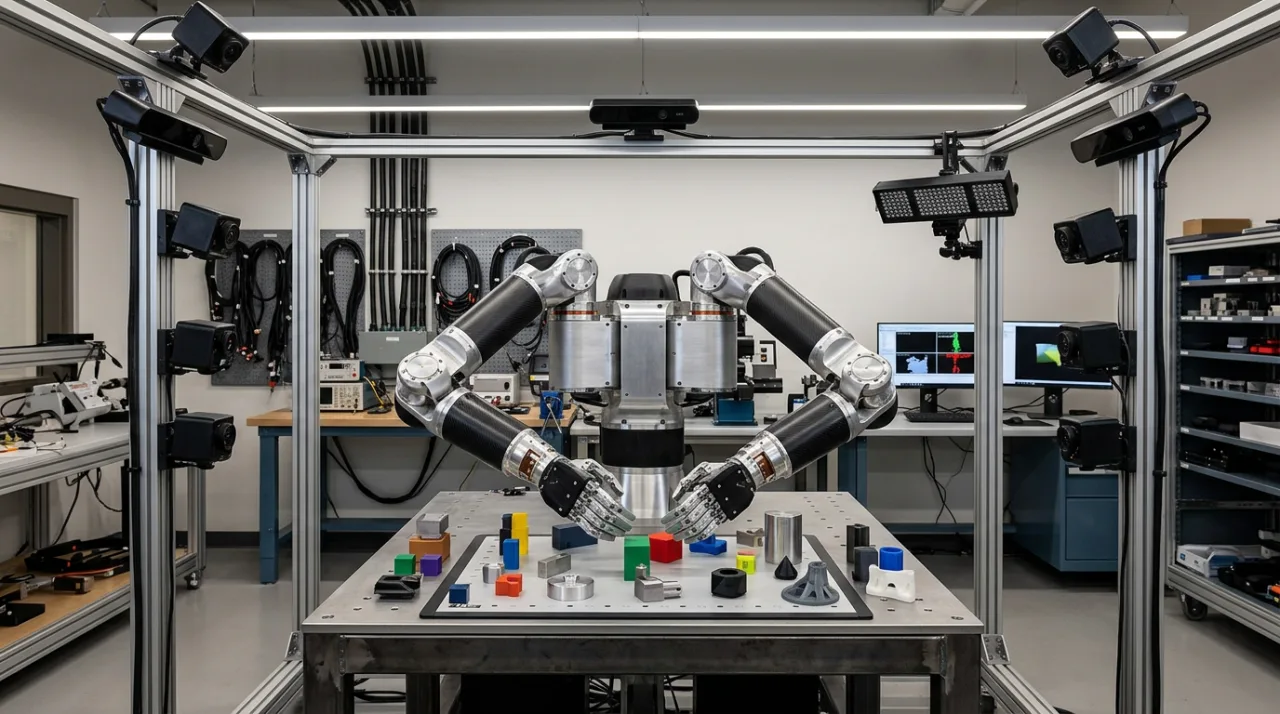
Nvidia open-sourced Flora on October 20, 2026, through its GEAR robotics lab. The release supplies three fine-tuned models that segment, caption, and score robot and human manipulation videos at roughly one-hundred-twenty-fifth the cost of GPT-6 Astra.
Nvidia Flora models and integration with GR00T
Flora consists of Flora-TempSeg, a 9-billion-parameter model that divides videos into timestamped action intervals; Flora-Captioner, a 27-billion-parameter model that produces contextual descriptions and instructions; and Flora-Rewarder, another 27-billion-parameter model that generates dense process rewards, outcome rewards, and rubric scores. All three models derive from Qwen3.5 and run on the same inference stack.
The suite functions as Nvidia’s internal data engine for GR00T humanoid foundation models, including GR00T-2. It supplies timestamped captions for data curation, process rewards for reinforcement-learning post-training, and outcome or rubric rewards for evaluation and deployment monitoring. Production use on 512 GB300 GPUs processes up to 200,000 hours of video daily.
Weights are available on Hugging Face under the NVIDIA OneWay Noncommercial License, which permits research and internal development but excludes commercial redistribution or production support. Researchers can therefore download the models immediately and insert them into existing data pipelines without licensing fees.
Cost comparison, quality metrics, and benchmarks
Nvidia estimates Flora processes one hour of video for $0.72 at a $10-per-GPU-hour rental rate, compared with $88.49 for GPT-6 Astra. The 122-to-125-fold cost reduction stems from smaller model sizes and task-specific fine-tuning rather than general-purpose inference. In an internal test of 50 videos, Flora reached 57.1 percent annotation quality while Astra scored 53.7 percent.
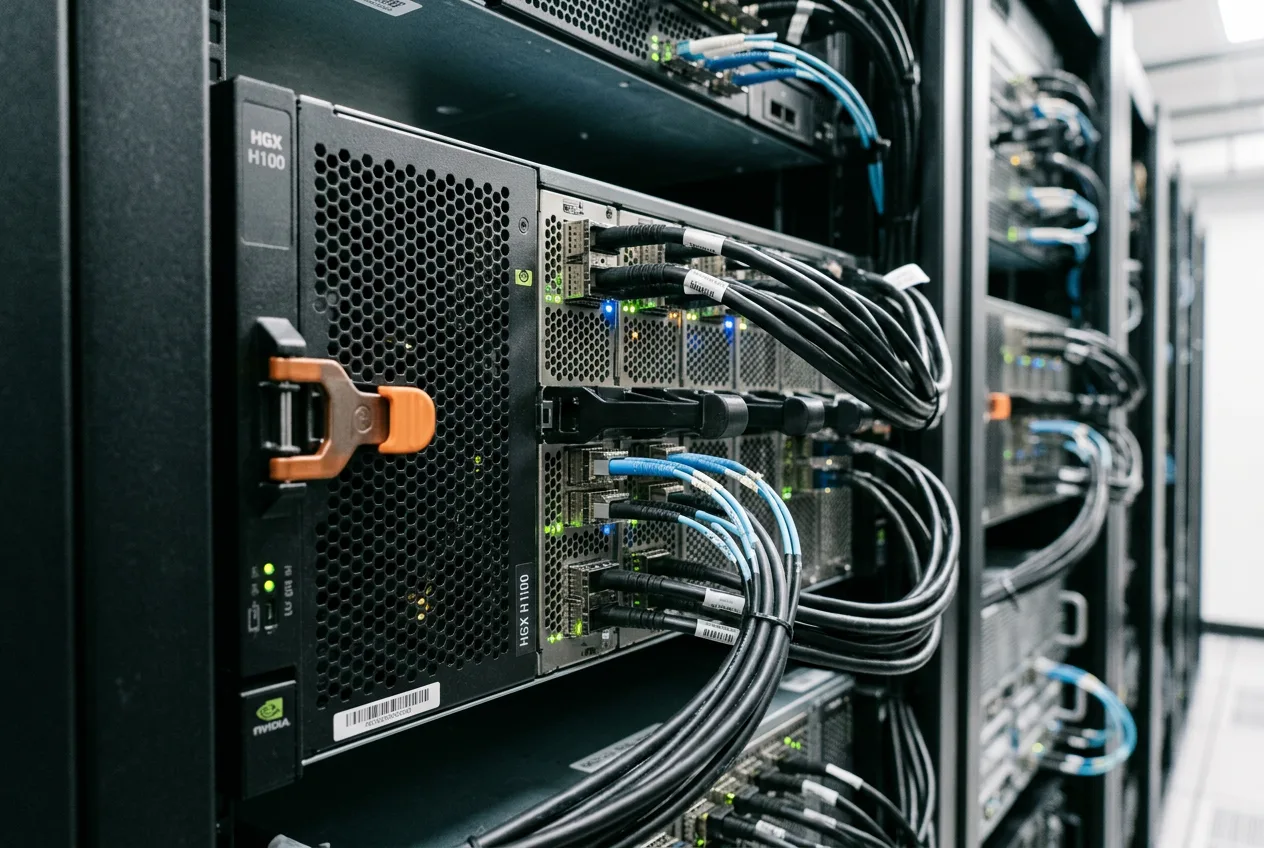
On public benchmarks Flora records state-of-the-art results for WGO-Bench captioning, RoboReward, and Robometer reward modeling. It achieves 53.3 percent failure-step recall on DenseRewardBench, where competing open models register near zero. Performance remains competitive on robot-video description and rubric scoring, though Astra retains an edge on certain human-video captions.
The open release removes the previous data-labeling bottleneck that limited scaling of robot foundation models. Teams can now create custom datasets for human-to-robot transfer and physical-world auto-research without recurring large-language-model API charges.
Availability and next steps for robotics teams
Developers access the three models through the nvidia/flora collection on Hugging Face. Integration requires standard transformer inference frameworks and works on clusters already equipped with Blackwell GPUs. No additional commercial timeline has been announced as of October 25, 2026.
Independent verification of the reported cost and quality figures remains pending. Early adopters can run the models on their own video corpora to measure throughput and annotation consistency before committing production workloads.
Frequently asked questions
What license covers the Nvidia Flora models?
The models are released under the NVIDIA OneWay Noncommercial License, which allows research and internal development but prohibits commercial redistribution or production deployment support.
How does Flora compare with GPT-6 Astra on cost?
Nvidia estimates Flora labels one hour of video for $0.72 versus $88.49 for GPT-6 Astra, producing a cost reduction of approximately 125 times based on $10-per-GPU-hour pricing.
Which models are included in the Flora release?
The release contains Flora-TempSeg (9B) for action segmentation, Flora-Captioner (27B) for descriptions, and Flora-Rewarder (27B) for process and outcome rewards.
Can teams use Flora with existing robot datasets?
Yes. Researchers can download the weights from Hugging Face and integrate the models into custom data-curation and reinforcement-learning pipelines without additional licensing costs.
By YasTech Editorial
Comments 4