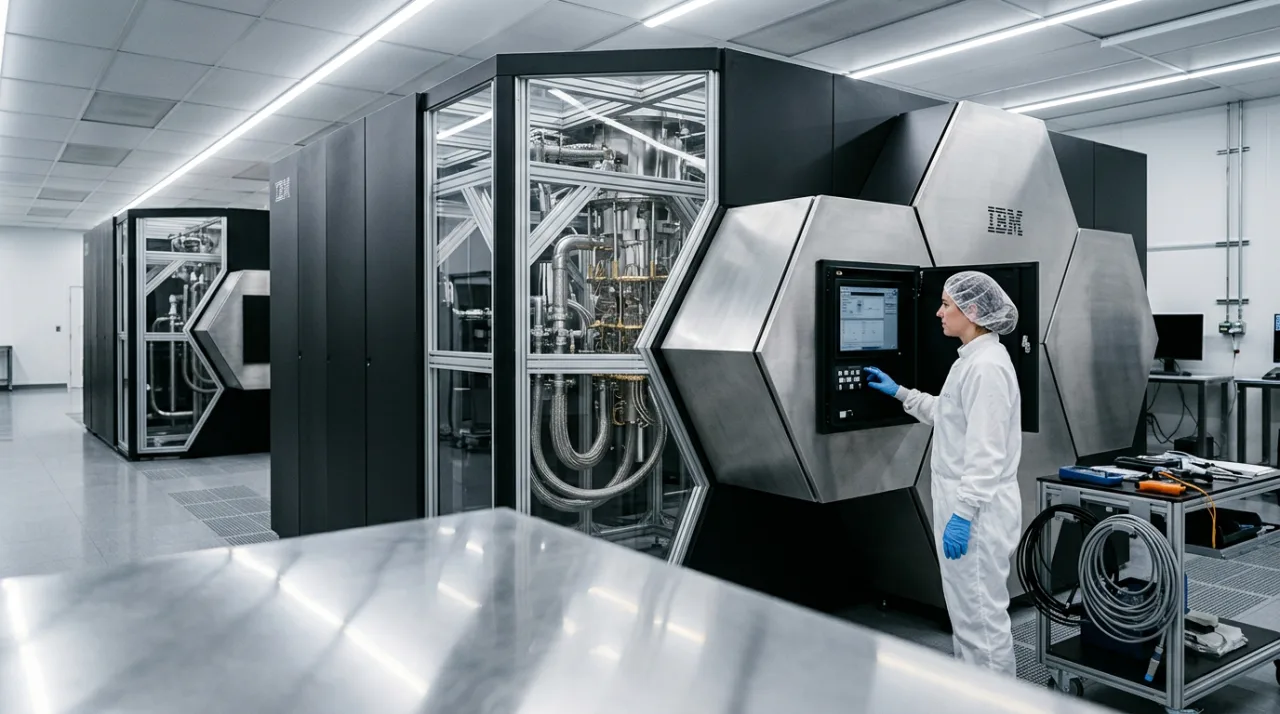
IBM has recorded measurable progress on error correction using its Quantum System Two modular cryogenic platform during 2026. Demonstrations include logical qubit operations that run longer than physical circuits and first tests linking separate modules inside the same dilution refrigerator.
Recent Error Correction Results on System Two
In July 2026, IBM and the University of Chicago ran a computation on 70 logical qubits that performed 2,415 logical two-qubit gates and 468 T gates. The logical error rate stayed roughly ten times lower than the physical error rate, and the full circuit required about fifteen minutes on hardware. The same workload remains out of reach for classical simulation at comparable accuracy.
Earlier in the year, IBM tested qLDPC codes on experimental processors that need far fewer physical qubits per logical qubit than surface-code approaches. Real-time decoding on FPGAs reached latencies below 480 nanoseconds. These techniques were exercised on Nighthawk r2 chips that support dynamic circuits and more than 7,500 accurate gates.
System Two installations now operate in Yorktown Heights, at RIKEN in Kobe, and in San Sebastián. A further Nighthawk r2 system is scheduled for the CSCS site in Switzerland by the end of 2026. All sites remain reachable through the IBM Quantum Platform for cloud users and through hybrid on-premises arrangements for selected partners.
Modular Architecture and Enterprise Access
Quantum System Two uses hexagonal dilution refrigerators that house multiple superconducting processors cooled below 15 millikelvin. L-couplers connect chips across modules, allowing the system to grow beyond the limits of a single die. In August 2026, IBM announced the first successful connection of separate cryogenic modules, a step required for larger qubit counts.
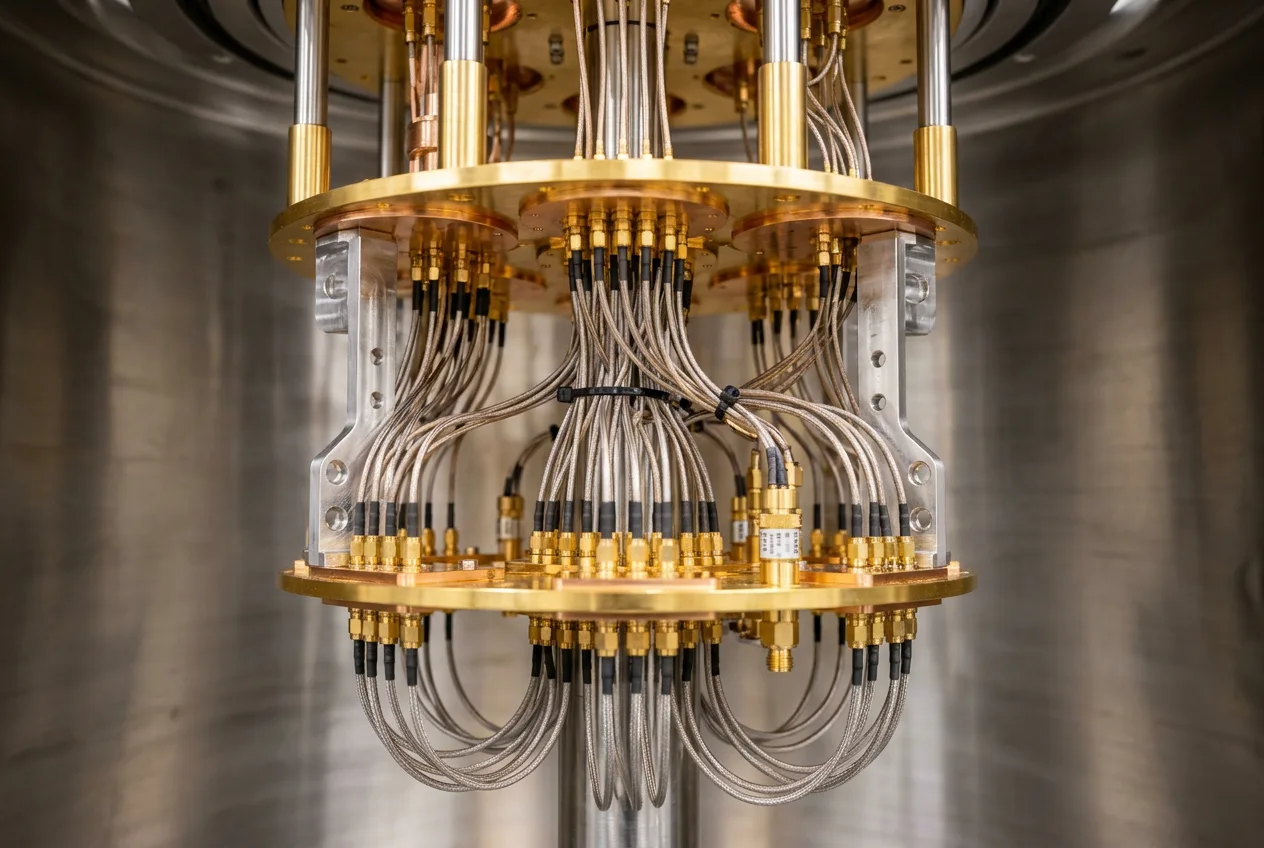
Current individual processors inside these systems include 120-qubit Nighthawk r2 and 133- or 156-qubit Heron variants. Earlier IBM roadmaps listed configurations near 1,386 qubits through linked modules, though those exact processor counts have not yet been deployed. The emphasis has shifted to improving error rates and connectivity rather than raw qubit totals.
Enterprise teams access the hardware through Qiskit runtime for hybrid quantum-classical workflows. IBM has committed more than ten billion dollars to manufacturing scale-up on 300-millimeter wafers and to continued software development. The company targets quantum advantage demonstrations in 2026 and a fault-tolerant system named Starling with roughly 200 logical qubits by 2029.
Frequently asked questions
What error correction milestone did IBM reach with Quantum System Two in 2026?
IBM and the University of Chicago demonstrated a computation on 70 logical qubits that ran 2,415 logical two-qubit operations with logical error rates about ten times lower than physical rates.
How many qubits are currently available in deployed IBM Quantum System Two systems?
Individual processors such as the 120-qubit Nighthawk r2 and 133- or 156-qubit Heron chips are installed; modular linking of multiple processors inside one cryostat is under active development.
Can enterprises access IBM Quantum System Two through the cloud?
Yes, the systems remain available via the IBM Quantum Platform, with additional on-premises or hybrid options offered to selected partners.
What is the next major hardware target after current System Two deployments?
IBM plans continued module linking to reach at least 1,000 programmable qubits by 2027 and a fault-tolerant Starling system with around 200 logical qubits by 2029.
By YasTech Editorial
Comments 3