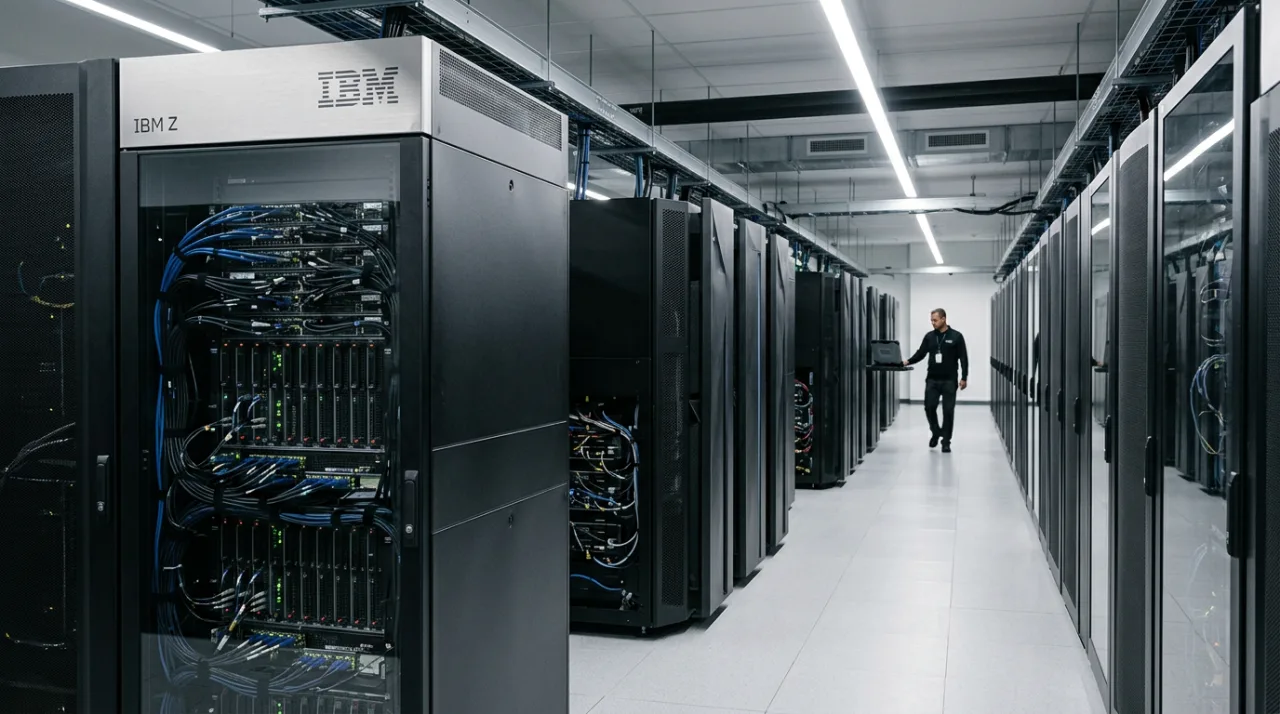
IBM reported third-quarter 2026 results on October 21, 2026, with total revenue reaching $17.1 billion, a 5 percent increase year over year and 6 percent at constant currency. The company beat analyst estimates of approximately $16.82 billion. Software remained the largest segment at $7.8 billion, up 8 percent reported and 9 percent at constant currency.
Breakdown of Q3 2026 Revenue Segments
Within software, hybrid cloud offerings tied to Red Hat grew 11 percent. Data and AI products rose 19 percent reported and 20 percent at constant currency. Transaction processing increased 9 percent reported and 10 percent at constant currency, while automation declined 3 percent. Software annual recurring revenue reached $24.9 billion, an 8 percent rise. The infrastructure segment totaled $3.7 billion, up 4 percent reported and 5 percent at constant currency, with hybrid infrastructure advancing 8 percent reported and 9 percent at constant currency.
Consulting revenue came in at $5.3 billion, flat on a reported basis and up 2 percent at constant currency. GAAP net income rose 26 percent to $2.19 billion. Operating diluted earnings per share increased 11 percent to $2.95, exceeding expectations by roughly $0.08 to $0.09. Free cash flow for the quarter reached $3.0 billion, up $0.7 billion from the prior year, while nine-month free cash flow stood at $7.8 billion.
IBM Z mainframe revenue fell 20 percent reported and 19 percent at constant currency, consistent with typical post-launch cycles. Management stated that roughly two-thirds of deals delayed from the second quarter closed in the third quarter and that no broad customer exits occurred. Program-to-date revenue for the latest generation sits more than $1 billion ahead of the prior cycle.
Mainframe Modernization and Enterprise Cloud Spending Trends
Enterprises continue to run critical workloads on IBM Z platforms, which handle over 70 percent of transaction value in sectors such as banking and retail. Companies are integrating AI capabilities and addressing skills gaps through tools including watsonx Code Assistant. Hybrid architectures that combine on-premises mainframes with public and private cloud resources remain central to these efforts.
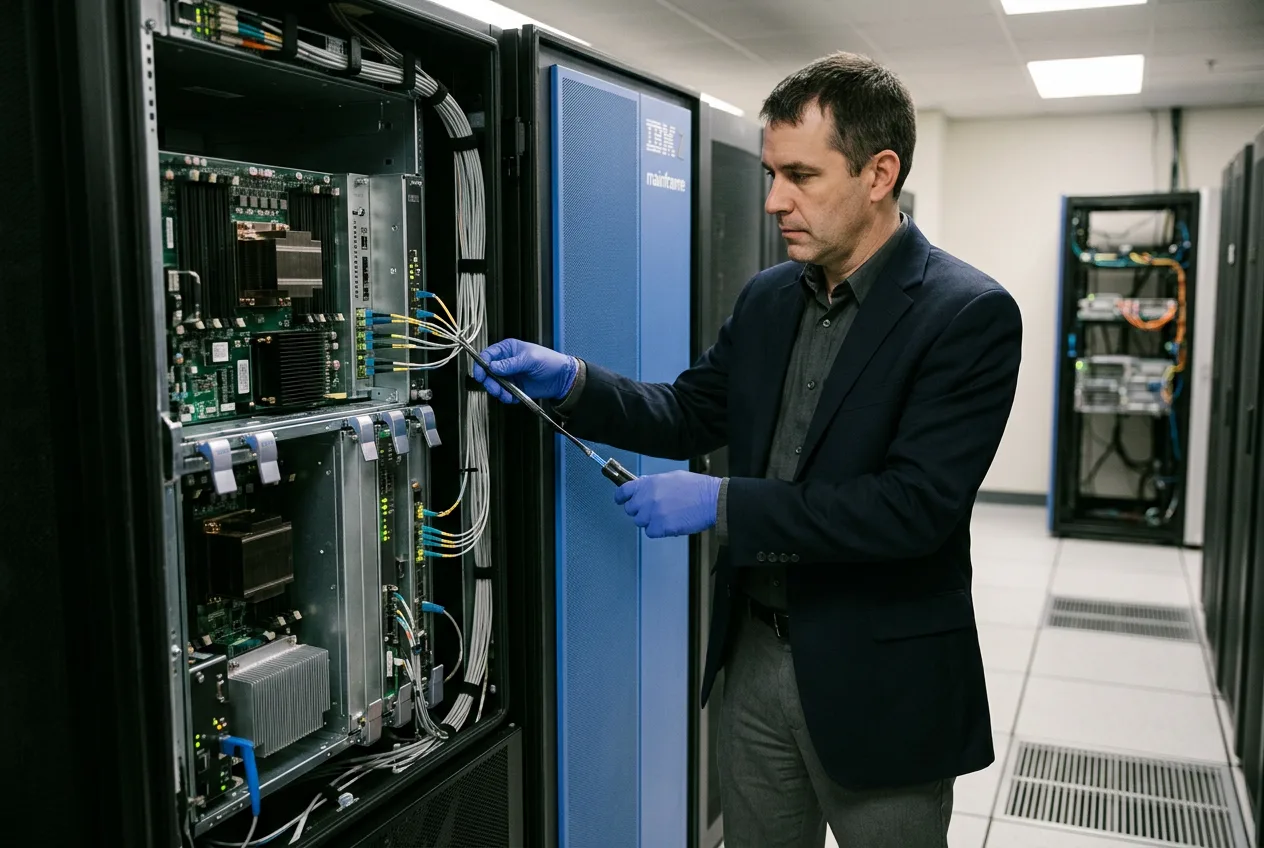
Red Hat OpenShift adoption supports scaling of hybrid environments, allowing organizations to deploy consistent workloads across locations. Distributed infrastructure revenue jumped 31 percent reported and 32 percent at constant currency, reflecting demand for these flexible setups. IBM executives noted productivity gains and faster deal closures during the quarter.
Industry data from Gartner indicates sustained mainframe usage alongside gradual modernization projects. Enterprises evaluating cloud spending now prioritize measurable returns on AI integration and operational resilience over wholesale platform replacement. IBM reported no evidence of accelerated migration away from the Z platform despite the quarterly revenue dip.
Updated Guidance and Next Steps for Decision Makers
IBM reaffirmed full-year 2026 constant-currency revenue growth of 4 to 5 percent. The company raised its software growth outlook to approximately 7 to 8 percent, citing double-digit hybrid cloud expansion and mid-teens growth in data and AI. Free cash flow guidance increased to more than $1 billion year-over-year improvement.
Chief Executive Arvind Krishna highlighted client deployments of what the company terms “Super Intelligence” to reshape operating models. Chief Financial Officer Jim Kavanaugh pointed to margin expansion and operational discipline. Results for the fourth quarter and full year are scheduled for late January or early February 2027.
Procurement and IT teams at large organizations can use these figures to benchmark hybrid cloud budgets and assess timing for mainframe-related investments. Continued focus on OpenShift scaling and AI-driven tooling offers concrete reference points for multi-year roadmaps.
Frequently asked questions
What drove IBM hybrid cloud revenue growth in Q3 2026?
Red Hat offerings within the software segment grew 11 percent, contributing to the overall software revenue of $7.8 billion. Data and AI products rose 19 percent, supporting the hybrid cloud performance.
How did IBM Z mainframe revenue perform in the latest quarter?
IBM Z revenue declined 20 percent year over year due to the typical post-launch cycle after the z17 introduction. Management confirmed two-thirds of delayed deals closed during the quarter with no broad customer exits.
What is IBM full-year 2026 revenue guidance after the Q3 report?
The company reaffirmed 4 to 5 percent constant-currency growth for the full year and raised the software growth target to 7 to 8 percent. Free cash flow outlook improved to more than $1 billion year-over-year increase.
How are enterprises approaching mainframe modernization in 2026?
Organizations integrate AI tools such as watsonx Code Assistant while maintaining hybrid architectures. Over 70 percent of critical transaction value in banking and retail continues to run on mainframe platforms.
By YasTech Editorial
Comments 4