
European data center operators reached more than 12.1 GW of operational capacity across EMEA in the first half of 2026, up 36 percent from roughly 8.9 GW two years earlier, according to Cushman & Wakefield data. AI-driven demand has accelerated signings, yet utilization remains uneven because of differences in how markets measure power draw versus installed IT load. Primary hubs in Frankfurt, London, Amsterdam, Paris and Dublin recorded vacancy rates of 6.3 to 6.4 percent at the end of 2025, with CBRE projecting similar tightness through the close of 2026.
Europe Data Center Utilization 2026 Metrics Vary by Region
Available figures show no uniform Europe-wide utilization percentage. In the UK Power Networks region, average electricity utilization of booked grid capacity stood near 20 percent, with larger sites running even lower. German operators recorded roughly 54 percent average IT utilization when Bitkom 2025 energy consumption data is compared with connected capacity. Norwegian sites used only 18 percent of allocated grid capacity on average. These differences arise because some facilities reserve substantial headroom for future AI clusters while others run closer to installed limits.
Core FLAP-D markets continue to attract the bulk of hyperscale commitments, yet 83 percent of certain pipelines are already pre-let. Secondary locations in the Nordics and Southern Europe now sit an average 175 km farther from traditional hubs than projects built five years ago. Roland Berger forecasts installed European capacity will reach about 23 GW by 2030, although Europe’s share of global capacity is expected to fall to around 10 percent.
AI Data Center Demand Accelerates While Grid Connections Constrain Delivery
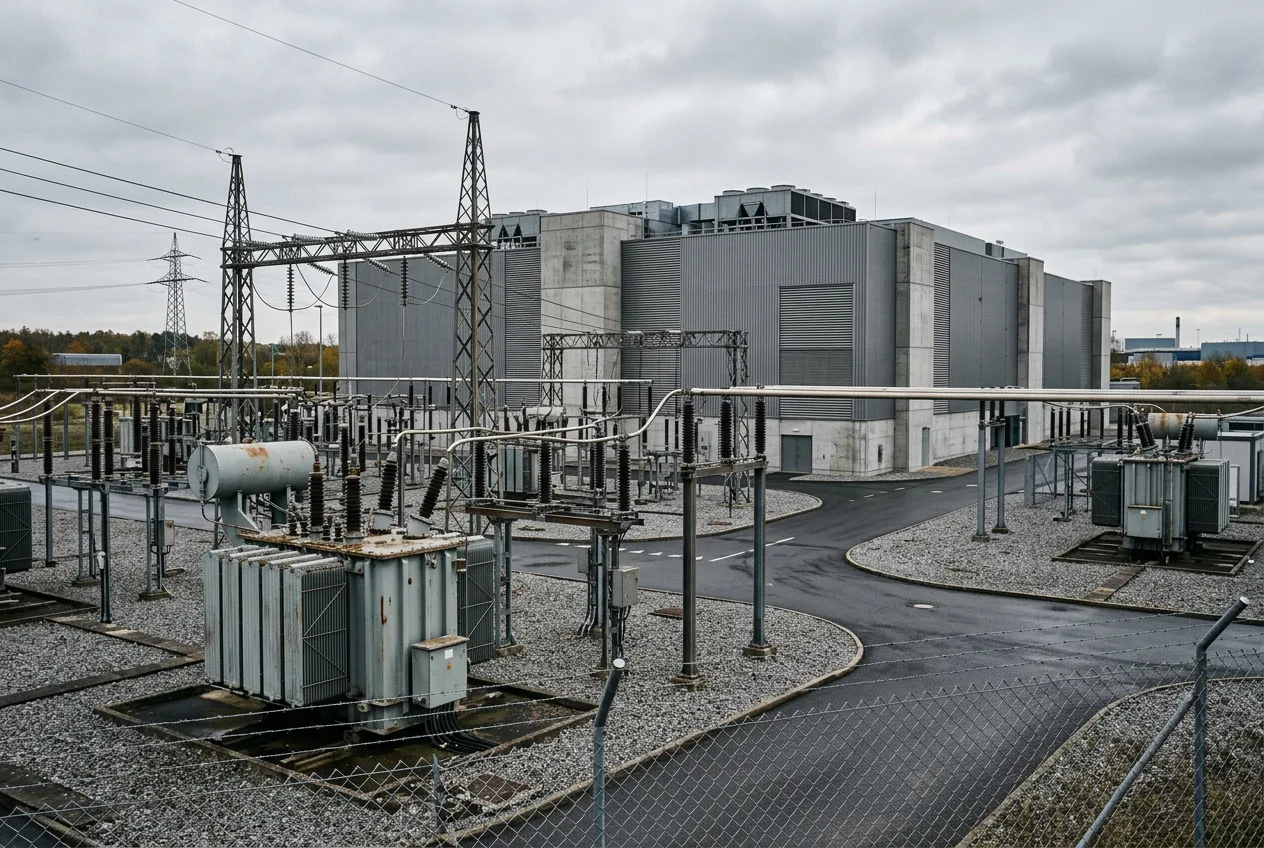
Neocloud AI signings quadrupled to 420 MW in the first half of 2026 compared with 89 MW in the prior-year period, according to BloombergNEF. Hyperscaler self-build activity grew approximately 22 percent during the same window. At the same time, 11 of 17 European countries have introduced pauses, rationing or stricter conditions on new grid connections. Wait times for grid access now reach seven years or more in several markets, versus one to three years typical in the United States.
The construction pipeline totals 18.3 GW, split between 3.8 GW already under construction and 14.5 GW in planning. Of 477 tracked projects of at least 1 MW, 207 had reached permitted or construction status by late October 2026. EUDCA estimates cumulative investment of €176 billion between 2026 and 2031, with focus shifting toward efficiency measures such as lower PUE designs and liquid cooling retrofits.
Practical Implications for Hyperscale Capacity Europe and Enterprise Buyers
Operators and enterprise customers face longer lead times and higher power costs when securing capacity in primary markets. Organizations planning AI workloads should evaluate secondary markets early and factor in potential grid delays when modeling deployment timelines. BloombergNEF’s base-case outlook points to 53.1 GW of EMEA power capacity by 2035, yet delivery risk remains elevated for announced projects still awaiting permits or firm grid allocations. Buyers who lock in capacity now with clear power-delivery milestones gain a measurable advantage over those waiting for later phases of the pipeline.
Frequently asked questions
What is the current operational capacity of EMEA data centers in 2026?
Cushman & Wakefield reports more than 12.1 GW operational in H1 2026, a 36 percent increase from 8.9 GW in Q2 2024.
How do utilization rates differ across European markets?
UK sites average around 20 percent electricity utilization of booked capacity, Germany reaches about 54 percent IT load, and Norway sits near 18 percent of allocated grid capacity.
What bottlenecks limit new hyperscale projects in Europe?
Grid connections represent the main constraint, with waits of up to seven years in multiple countries and nationwide pauses in the UK as of late 2026.
How much new capacity is under construction or planned?
The pipeline totals 18.3 GW, including 3.8 GW already in construction and 14.5 GW in planning stages.
By YasTech Editorial
Comments 1