
Cadence announced on October 21, 2026, that its ChipStack AI Super Agent now operates at Level-5 autonomy inside Europe’s first sovereign AI platform in Munich. The deployment pairs the agent with NVIDIA Nemotron models on a dedicated facility that keeps all semiconductor and AI design data within EU borders.
Cadence ChipStack AI Super Agent Executes Full Design Workflows
The Level-5 version of the Cadence ChipStack AI Super Agent handles complete chip design and verification cycles without step-by-step human direction. It manages specification analysis, RTL generation, verification planning, formal methods, simulation runs, debug, and coverage closure while an engineer retains final approval authority.
Deployments at NVIDIA and other partners show more than 40 times faster RTL validation cycles. A typical five-week verification loop now finishes in under one day through hundreds of parallel simulations executed on Cadence Xcelium and Jasper tools orchestrated by the AgentStack framework.
Earlier versions of the ChipStack platform, released after the November 2025 acquisition and February 2026 launch, already run in production at NVIDIA, Altera, and Qualcomm. The Level-5 capabilities and full AgentStack orchestration are scheduled for early-access customers in the second half of 2026.
Sovereign Munich Facility Supports Regulated EDA Workloads
The Munich data center integrates Cadence OnCloud services with NVIDIA Vera and Grace CPUs, the Cadence Millennium M2000 AI Supercomputer based on NVIDIA Blackwell architecture, and the Reality Digital Twin Platform. All workloads stay under ISO 27001, ISO 27017, and SOC 2 Type II controls with explicit EU data residency guarantees.
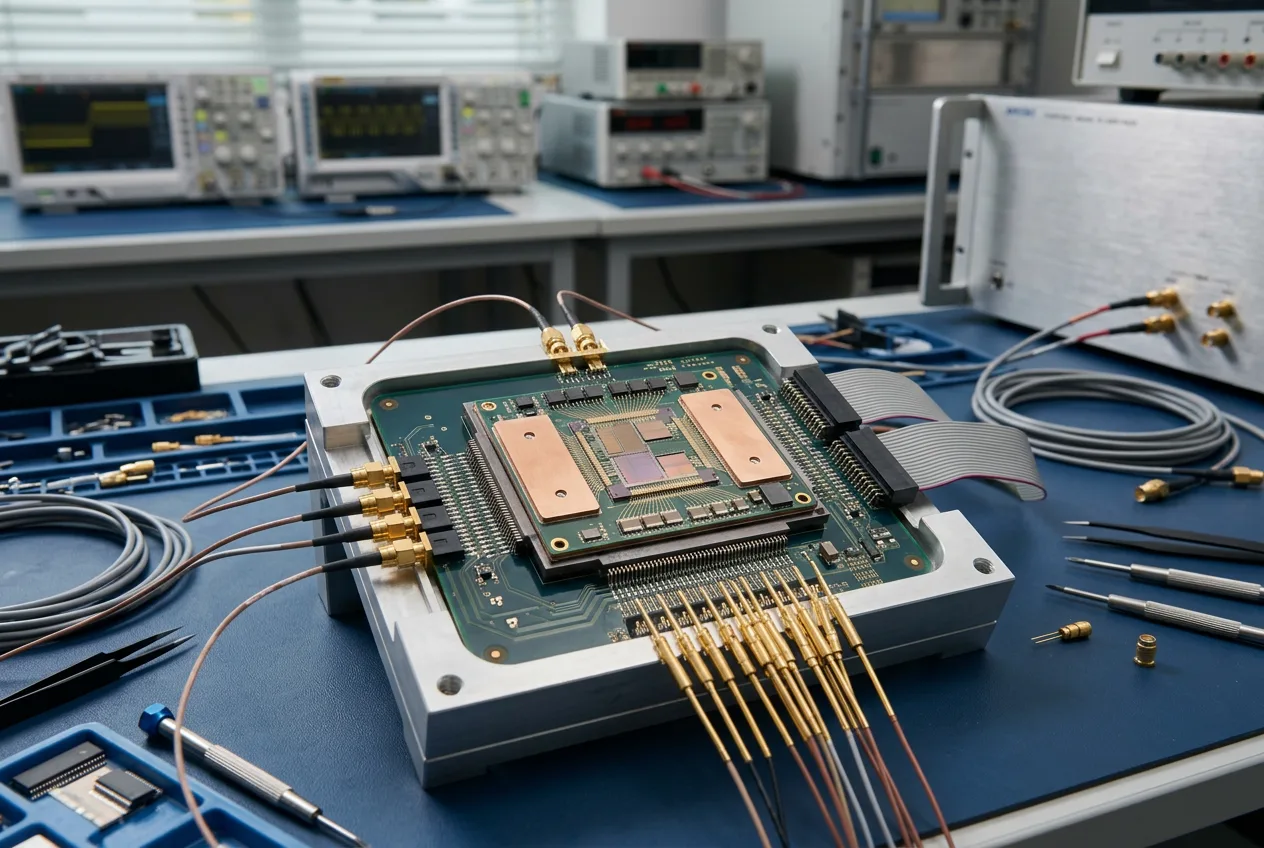
Cadence becomes the first EDA vendor to offer a comprehensive sovereign AI platform in Europe. Semiconductor companies, system designers, and AI infrastructure teams can now run chip design, advanced packaging, physical AI applications, and digital twin simulations while meeting EU regulatory and security requirements. OnCloud services are available immediately, with additional Blackwell-based compute capacity scheduled for 2027.
Related tools such as InnoStack, AuraStack, and ViraStack extend the same agentic approach to PCB layout, packaging, and system-level verification. Joint testing with partners including Toyota Europe on the M2000 platform demonstrated a fivefold speedup in simulation throughput compared with prior GPU clusters.
Next Steps for Customers and Infrastructure Expansion
Broader commercial availability of Level-5 features will follow the H2 2026 early-access window. Cadence continues to expand the Munich site and plans additional sovereign capacity in other European locations to match rising demand for governed AI-driven EDA automation. Design teams evaluating the platform can request early-access participation through Cadence account representatives.
Frequently asked questions
When will the Level-5 ChipStack AI Super Agent reach general availability?
Early-access releases are planned for the second half of 2026, following internal deployments at NVIDIA and partner sites that began after the February 2026 launch of earlier ChipStack versions.
What performance improvements does the Level-5 agent deliver?
NVIDIA deployments report more than 40 times faster RTL validation cycles, reducing typical five-week verification loops to less than one day through parallel simulations on Xcelium and Jasper tools.
How does the Munich facility ensure data sovereignty?
The site uses Cadence OnCloud certified under ISO 27001, ISO 27017, and SOC 2 Type II, combined with NVIDIA hardware and explicit EU data residency controls for all EDA and AI workloads.
Which companies already use earlier versions of the ChipStack platform?
Production deployments are active at NVIDIA, Altera, and Qualcomm, with additional testing underway at automotive partners such as Toyota Europe on the Millennium M2000 system.
By YasTech Editorial
Comments 5