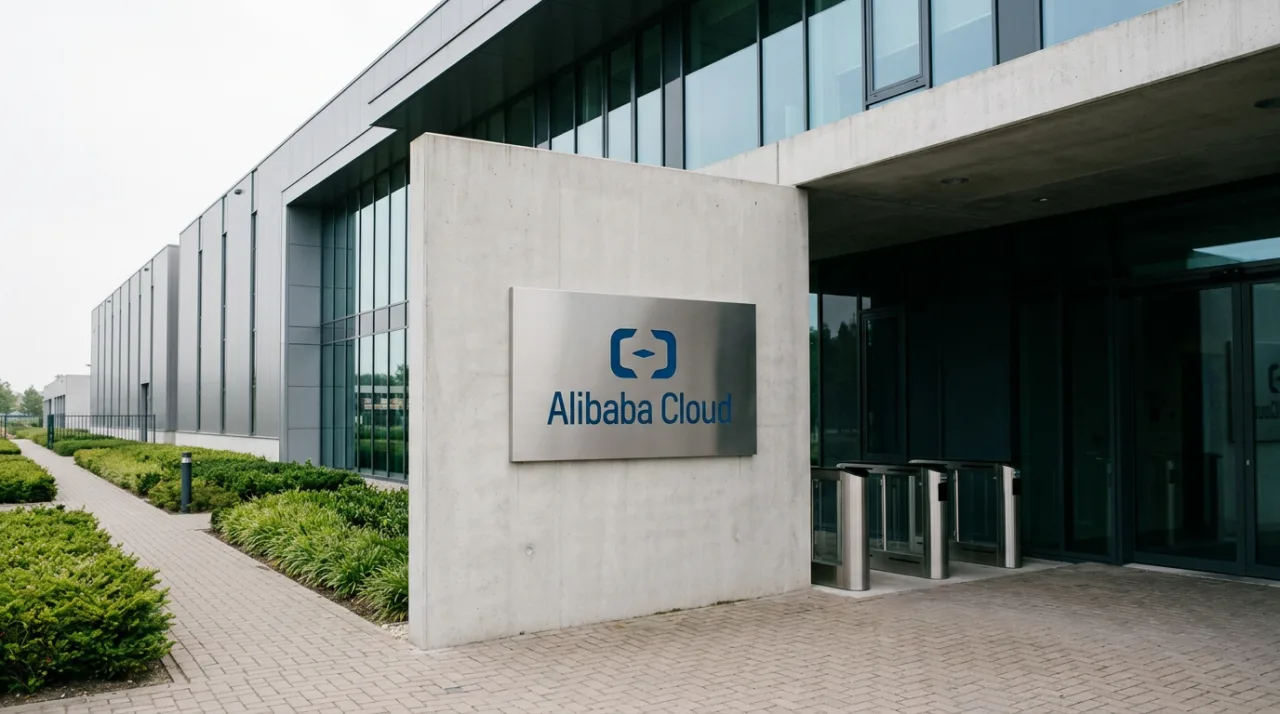
Alibaba Cloud launched its first public cloud region in the Netherlands on 29 October 2026, placing two availability zones in Amsterdam. The move gives European customers in-region access to elastic compute, storage, containers, networking, databases, security and cloud-native services, along with planned agentic AI tools such as ACS Agent Sandbox and Agent Security Center.
Alibaba Cloud Netherlands Region Capabilities and Availability
The new region supports the full Alibaba Cloud stack, including Qwen model infrastructure, and joins existing European sites in Frankfurt, London and Paris. Global footprint now totals 109 availability zones across 32 regions. The company stated that the Amsterdam launch responds to rising demand for localized AI and cloud capacity from Dutch and broader European businesses.
Lower latency for local users, improved disaster-recovery options and in-region data processing form the core benefits highlighted by Alibaba Cloud. Specific capacity figures and exact GPU counts remain undisclosed, yet the region already lists support for big-data analytics and security services. JetBrains, orq.ai, Monks, Magnific and Idea.ai are among the early organizations exploring the infrastructure for model integration and production workloads.
Dr. Feifei Li, CTO and President of International Business at Alibaba Cloud Intelligence, described the Netherlands as one of Europe’s most vibrant digital economies and noted that in-region infrastructure enables faster, secure innovation while meeting data-residency requirements.
European Cloud Expansion and Future Plans
The Amsterdam region forms part of Alibaba Group’s previously announced US$53 billion AI and cloud infrastructure program. It is the fourth European public cloud region after Germany, the United Kingdom and France. Additional data-center capacity in Germany and France is scheduled over the next 12 months, and a first region in Finland is already planned.

European enterprises increasingly seek localized infrastructure to satisfy data-sovereignty rules and performance needs. The new availability zones allow organizations to keep sensitive workloads inside the Netherlands while still accessing Alibaba Cloud’s global backbone. This pattern mirrors expansions by other hyperscalers that have added multiple European sites to address similar regulatory and latency demands.
Businesses evaluating the region can begin testing elastic computing and container services immediately. Those running AI workloads gain access to Qwen models with reduced round-trip times compared with distant regions. Over the coming year, further capacity additions in neighboring countries will provide additional options for multi-region architectures and compliance strategies.
Practical Implications for Enterprise Adoption
Companies handling European customer data can now process and store information within the Netherlands without routing traffic outside the EU. This configuration simplifies compliance with data-protection frameworks while maintaining access to advanced analytics and AI tooling. Network architects should review current latency baselines against the new endpoints to quantify performance gains.
Integration planning can start with existing Alibaba Cloud accounts; the region appears in the console alongside other European locations. Organizations already using JetBrains tools or exploring Qwen models receive a direct path to test workloads locally. Continued expansion into Finland will extend coverage to Nordic markets, giving multinationals a denser European footprint for disaster-recovery and active-active designs.
Frequently asked questions
When did Alibaba Cloud open its Netherlands region?
The region went live on 29 October 2026 with two availability zones located in Amsterdam.
Which services are available in the new Alibaba Cloud Netherlands region?
Elastic computing, storage, containers, networking, big data, security, databases and cloud-native services are offered now, with agentic AI tools scheduled next.
How does the Amsterdam launch affect data residency for European customers?
Workloads and data can remain inside the Netherlands, meeting local residency rules while providing low-latency access for EU users.
What other European regions does Alibaba Cloud operate?
The company already runs regions in Frankfurt, London and Paris, bringing its total European count to four after the Amsterdam addition.
By YasTech Editorial
Comments 1