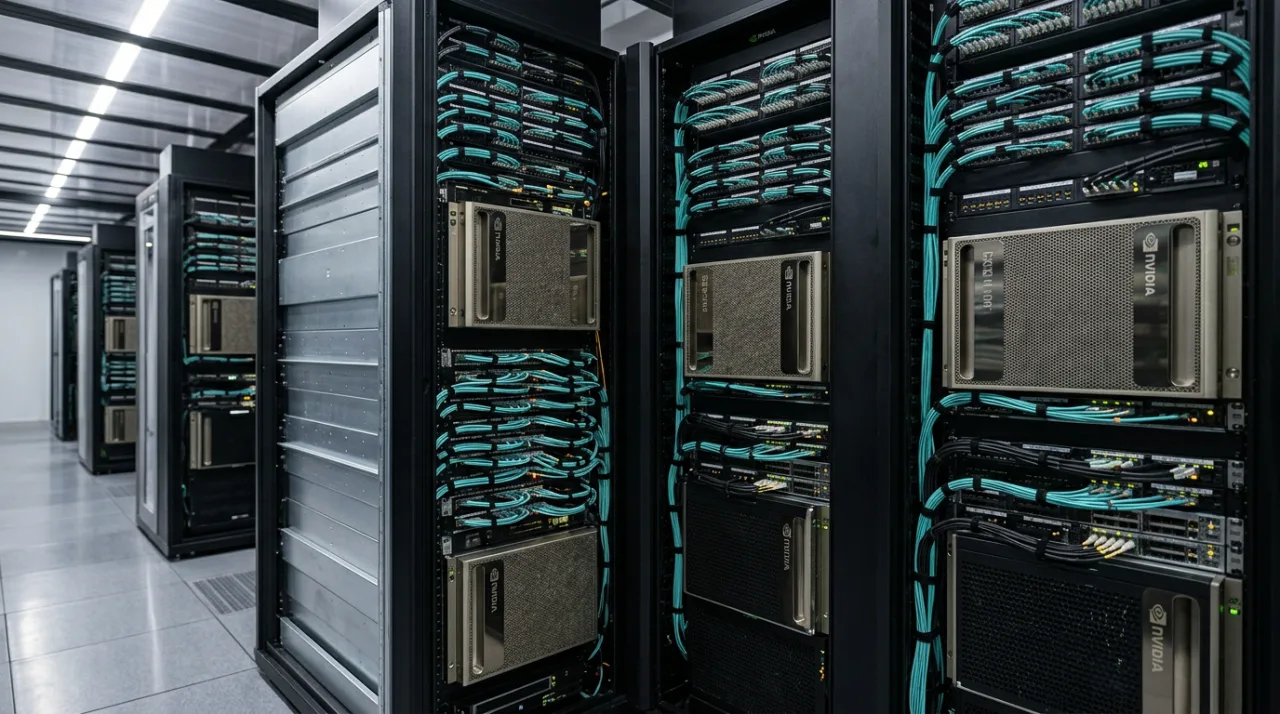
NVIDIA announced expanded availability of DGX Cloud on Azure on November 12, 2026, providing enterprises with managed clusters of NVIDIA-accelerated infrastructure for large-scale AI training. The offering combines dedicated GPU resources with NVIDIA software stacks and is listed in the Azure Marketplace, removing the need for organizations to build and maintain on-premises supercomputing clusters.
Platform Capabilities on Azure
NVIDIA DGX Cloud Azure supplies tightly coupled GPU clusters optimized for both training and inference workloads. Enterprises gain access to NVIDIA Run:ai for job orchestration, NVIDIA Omniverse for digital-twin and physical-AI simulations, and NVIDIA Cloud Functions for serverless inference. Additional tools include NVIDIA Cosmos Curator for data preparation pipelines and direct support from NVIDIA Technical Account Managers with 24/7 coverage.
Performance benchmarks published in 2025 demonstrated that ND H100 v5 virtual machines on Azure scale LLM training to 1,024 GPUs at parity with NVIDIA reference systems. The platform supports hybrid and multi-cloud deployments and integrates with Microsoft Fabric and agentic-AI toolchains already used inside many Azure environments. Current deployments reach thousands of GPUs under subscription terms that include service-level agreements.
Enterprise Adoption and Internal Validation
NVIDIA itself uses DGX Cloud as its primary AI factory for developing frontier models such as the Nemotron family, Cosmos, Isaac GR00T, and Alpamayo. External customers report concrete results: Amgen trained a protein-language model in under one month, Cerence deployed an automotive LLM entirely on Azure-hosted DGX Cloud, and Amdocs runs telco-specific AI workloads on the same infrastructure.
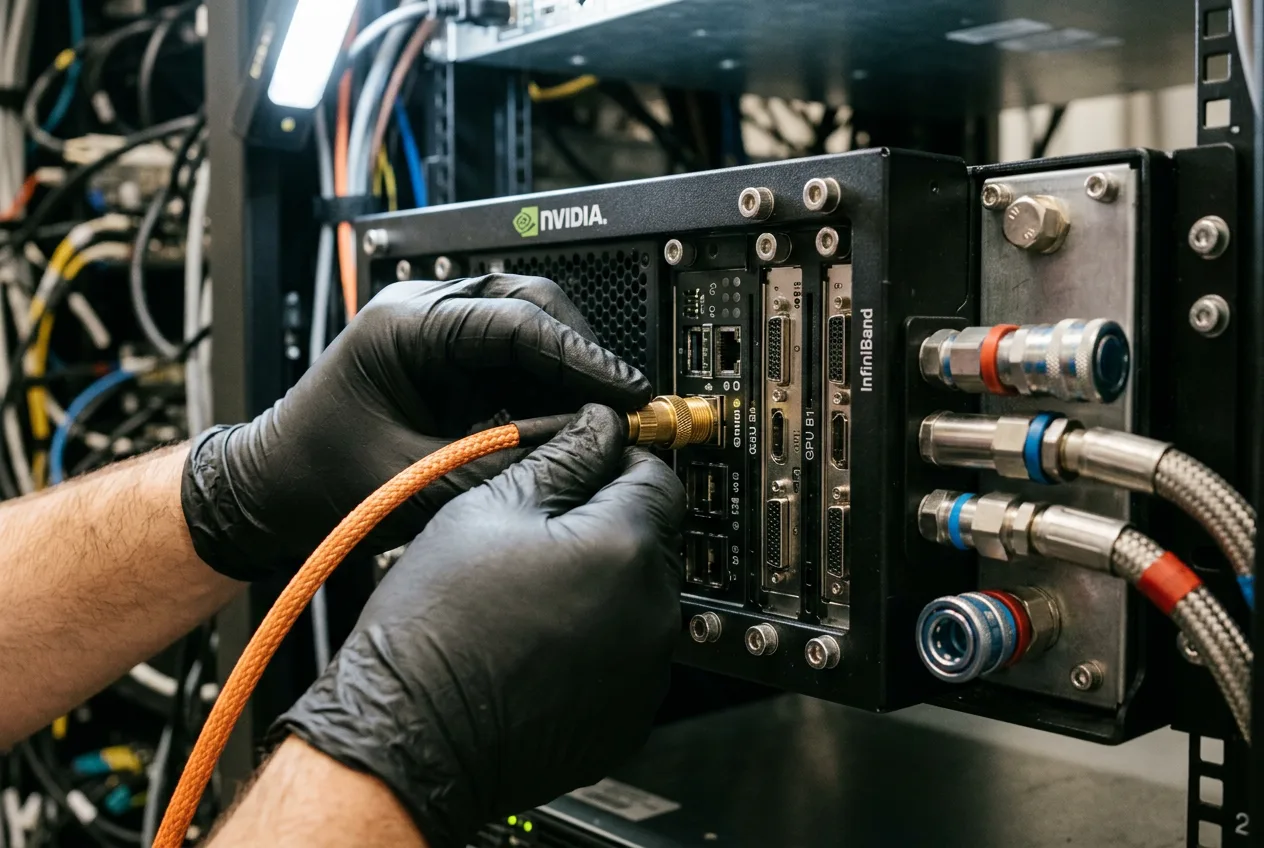
The service originated with Oracle Cloud Infrastructure in 2023 and has since added Google Cloud and other providers. Azure integration has matured through co-engineering with Microsoft, enabling consistent performance across on-premises, sovereign-cloud, and public-cloud footprints. Pricing follows a subscription model with flexible commitment lengths; earlier public references listed dedicated instances near $37,000 per month, though enterprise contracts are negotiated directly through NVIDIA sales.
Next Steps for AI Infrastructure Teams
Upcoming expansions include GB300 NVL72 clusters and reference architectures for the Vera Rubin generation. NVIDIA plans further marketplace features through DGX Cloud Lepton and tighter links to edge and sovereign offerings. Organizations evaluating the platform can start with Azure Marketplace listings or contact NVIDIA for private benchmarks tailored to specific model sizes and latency targets. The November 2026 update reinforces DGX Cloud as a production-ready path for enterprises that need supercomputing capacity without building data-center infrastructure.
Frequently asked questions
How does NVIDIA DGX Cloud Azure differ from standard Azure GPU VMs?
DGX Cloud supplies fully managed, tightly coupled clusters with NVIDIA software, orchestration tools, and dedicated support, rather than raw virtual machines that customers must configure themselves.
Which companies already use DGX Cloud on Azure?
Public examples include Amgen for protein modeling, Cerence for automotive LLMs, and Amdocs for telco workloads; NVIDIA also runs its own frontier-model development on the platform.
What GPU generations are currently supported?
Production clusters run on H100-based ND H100 v5 instances, with GB300 NVL72 systems scheduled for rollout in the coming quarters.
Is DGX Cloud Azure available through the Azure Marketplace?
Yes, the offering appears in the Azure Marketplace with options for browser-based access and integration into existing Azure subscriptions.
By YasTech Editorial
Comments
No comments yet. Be the first!