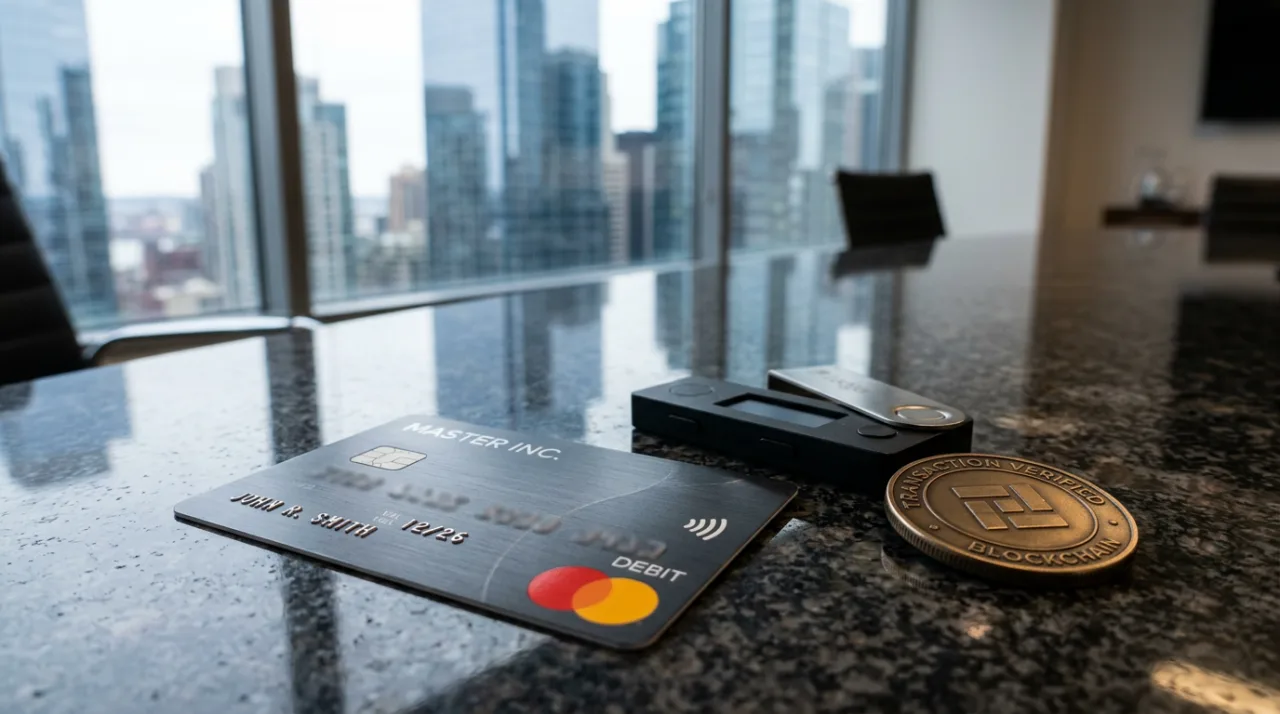
Mastercard blockchain payments now include on-chain settlement for card transactions through regulated stablecoins. The company began the phased rollout in June 2026 from its Purchase, New York headquarters, with initial live flows in the United States and Latin America.
Mastercard Blockchain Payments Support Eight Chains and Four Stablecoin Issuers
The network added support for Arbitrum, Base, Canton, Ethereum, Polygon, Solana, Tempo and XRPL. Settlement can occur in Circle USDC, Paxos PYUSD, USDG and USDP, Ripple RLUSD and SoFi SoFiUSD. Banks and processors including Cross River, Lead Bank, CBW Bank, Nuvei and ARQ have started routing select transactions through these rails.
Settlement cycles now run intraday, on weekends and on holidays in addition to standard banking hours. Early partners report reduced intermediary layers and the ability to move funds outside traditional cut-off times while retaining Mastercard’s existing compliance and risk controls.
The expansion follows the August 2026 acquisition of BVNK, valued at up to $1.8 billion, which supplies stablecoin infrastructure. In October the company launched its Global Money Platform, a single API that links multi-currency fiat and stablecoin accounts, real-time conversion and Mastercard Move payouts reaching more than 17 billion endpoints.
Context from Multi-Token Network Pilots and Global Money Platform
Mastercard’s Multi-Token Network, introduced in 2023, already connects tokenized deposits, programmable payments and selected real-world assets. The new settlement options extend that platform to card transactions and add direct interoperability with public and permissioned blockchains.
Partners such as Circle, Paxos and Ripple noted that the integration allows existing payment processors to offer 24/7 cross-border options without replacing core rails. Raj Dhamodharan, executive vice president of blockchain and digital assets, stated the focus remains on practical timing and liquidity benefits while preserving regulatory safeguards.
Further rollout continues through the remainder of 2026, subject to local licensing. The Global Money Platform is scheduled to add 40 currencies and coverage in more than 200 countries during 2027, alongside support for tokenized deposits and agentic-commerce use cases.
Practical Impact for Banks, Processors and Corporate Treasuries
Financial institutions can now choose between fiat and stablecoin settlement on the same Mastercard infrastructure. This reduces friction caused by time zones and banking holidays while maintaining the network’s existing fraud and compliance layers.

Corporate users gain faster reconciliation and potential cost savings on cross-border flows that previously required multiple correspondent banks. Processors such as Nuvei have begun offering the option to select clients in supported corridors, with additional regions expected once regulatory approvals are secured.
Frequently asked questions
Which blockchains does Mastercard support for settlement?
The company added Arbitrum, Base, Canton, Ethereum, Polygon, Solana, Tempo and XRPL. Settlement occurs on these eight networks using regulated stablecoins.
When did the on-chain settlement rollout begin?
Mastercard announced the expansion on June 3 2026 and started initial flows with early adopters in the United States and Latin America that same month.
Which stablecoins are accepted?
Supported assets include Circle USDC, Paxos PYUSD, USDG and USDP, Ripple RLUSD and SoFi SoFiUSD.
How does the Global Money Platform relate to these changes?
Launched in October 2026, the platform provides a single API for fiat and stablecoin accounts, real-time conversion and expanded payout reach that complements the new settlement options.
By YasTech Editorial
Comments
No comments yet. Be the first!