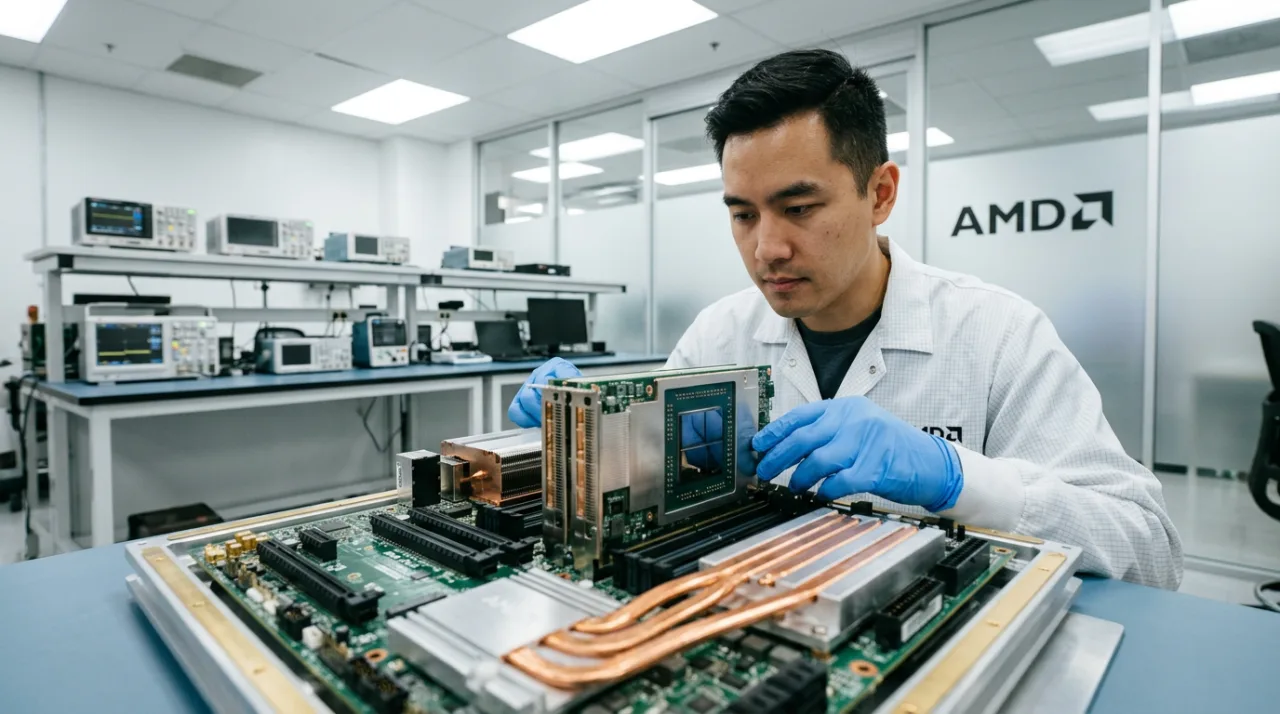
AMD completed its acquisition of Taalas, a Toronto-based developer of specialized AI inference silicon, on November 17, 2026. The deal, first announced on August 6, 2026, was valued at approximately $2.9 billion in cash and stock, including up to $1.4 billion in contingent consideration according to AMD’s November 4 quarterly filing.
Acquisition Details and Financial Terms
The transaction closed after all regulatory and customary conditions were satisfied. AMD’s cash-and-stock structure provided immediate liquidity to Taalas shareholders while tying additional value to future performance milestones. Taalas had previously raised about $219 million, including a $169 million round completed in February 2026.
AMD plans to fold Taalas engineers into its existing AI Group and expand its Canadian development footprint. No immediate revenue contribution or specific product launch dates were disclosed in the official announcement. Integration work will focus on combining Taalas technology with existing AMD accelerator lines.
Readers evaluating AMD’s competitive position should note the acquisition price relative to earlier funding rounds. The $2.9 billion valuation reflects both the team’s expertise and the strategic importance of model-specific inference hardware at a time when general-purpose GPUs face increasing power and latency constraints.
Taalas Technology and Product Roadmap
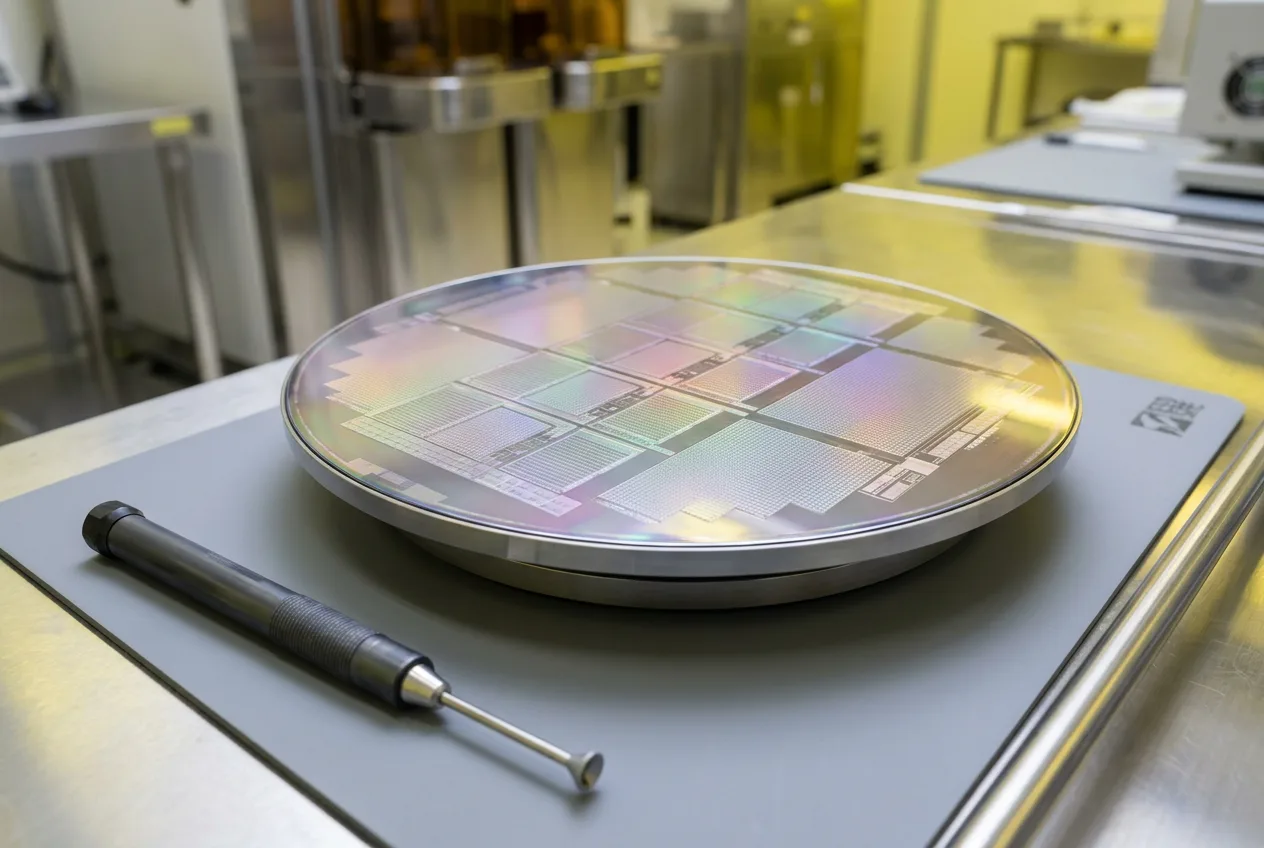
Taalas, founded in 2023, develops inference chips that hardwire model weights and dataflows directly into silicon. Its HC1 demonstrator, fabricated on TSMC’s 6 nm process with an 815 mm² die and 53 billion transistors, targets models such as Meta’s Llama 3.1 8B. Internal testing indicated higher tokens-per-second throughput at lower power compared with general-purpose architectures, though independent benchmarks remain limited.
AMD intends to incorporate the Taalas approach into its broader accelerator roadmap. The technology will sit alongside Instinct GPUs, EPYC CPUs, ROCm software, and Helios rack-scale systems. System-level designs are expected to deliver differentiated performance and efficiency for inference workloads that benefit from fixed-function acceleration.
Engineering teams will evaluate how Taalas’ model-specific designs complement programmable accelerators. This hybrid strategy allows AMD to address both high-volume inference tasks and emerging specialized models without forcing every workload onto a single architecture.
Strategic Implications for AMD Full-Stack AI
Vamsi Boppana, Senior Vice President of the AI Group at AMD, stated that inference demand is evolving rapidly and customers require optimized compute solutions. The acquisition expands AMD’s ability to deliver differentiated performance and efficiency across its full-stack AI platform.
The move follows other recent AMD AI-related acquisitions and positions the company to compete more directly in the growing inference segment. Enterprise and cloud customers evaluating hardware choices now have an additional option that combines programmable GPUs with fixed-function inference silicon under a single software stack.
Decision makers should monitor future AMD product announcements for concrete integration timelines and benchmark data. Early access programs or reference designs may appear in 2027 as engineering teams complete the first combined systems.
Frequently asked questions
When did AMD complete the Taalas acquisition?
AMD completed the acquisition on November 17, 2026, following the August 6 announcement and satisfaction of regulatory conditions.
What was the value of the AMD Taalas deal?
The transaction was valued at approximately $2.9 billion in cash and stock, including up to $1.4 billion in contingent consideration.
What technology does Taalas develop?
Taalas builds model-specific inference chips that hardwire AI model weights and dataflows into silicon to reduce compute and memory bottlenecks.
How will AMD integrate Taalas technology?
AMD plans to combine Taalas designs with its Instinct GPUs, EPYC CPUs, ROCm software, and Helios rack-scale offerings to create system-level AI solutions.
Does the acquisition include specific product timelines?
No product launch dates or revenue impact figures have been disclosed. Integration into the AMD roadmap is the immediate priority.
By YasTech Editorial
Comments
No comments yet. Be the first!